Thursday, 30 December 2021

省事與進步

兩三天前與朋友聚餐,偶爾談起華夏曆法演變。小弟無故想起《顏氏家訓》的一段資料,是這樣的:

前在修文令曹,有山東學士與關中太史競曆,凡十餘人,紛紜累歲,內史牒付議官平之。吾執論曰:『大抵諸儒所爭,四分幷減分兩家爾。曆象之要,可以晷景測之;今驗其分至薄蝕,則四分疏而減分密。疏者則稱政令有寬猛,運行致盈縮,非算之失也;密者則云日月有遲速,以術求之,預知其度,無災祥也。用疏則藏奸而不信,用密則任數而違經。且議官所知,不能精於訟者,以淺裁深,安有肯服?既非格令所司,幸勿當也。』舉曹貴賤,咸以為然。有一禮官,恥為此讓,苦欲留連,強加考核。機杼既薄,無以測量,還復采訪訟人,窺望長短,朝夕聚議,寒暑煩勞,背春涉冬,竟無予奪,怨誚滋生,赧然而退,終為內史所迫:此好名之辱也。      
——《顏氏家訓  省事第十二》 

驟眼看來,只是勸子弟別多事,不要固執原則而得罪人的老生常談而已;就算在在連鎖書店的「成功學」書架上讀到,也不會覺得違和。

然而,這場曆法爭論所折射出的,卻是漢朝以降儒者常有的想法:天人感應。天象異常,則是上天對世事的回應,或是對未來事的預警(「政令有寬猛,運行致盈縮」),而不是曆法有偏差。因此,明明推算出更準確的曆法,有人指責這是「任數而違經」。我說,以今天的觀點看,這大概就是迂腐吧。

朋友卻認為支持較疏的四分曆一派相當前衛:他們深信自然無法、也不應該被準確控制,不如保留漢代以來的傳承。況且容讓天象偶爾異常,換來皇權有所警惕,官員可以借機進諫,也有其價值。

不過,由魏晉至南北朝,四分曆還是逐漸被代替。越是近代,曆法越精,史書中便似乎越少皇帝因為因為天象異常而下罪己詔的記載。

臉書連結

Thursday, 2 December 2021

上屋搬下屋

臨近搬家,近來都在收拾屋中物。

往往看見一件衣服,就想起上次看見已是三四年前整理雜物的時候了。那時還以為可能會再穿,還是暫時留着。再看一眼,算了,還是放進樂施會的收集箱吧。

有時看見一本書,會想到某年想過把它捐出去,但又以為還會再讀。結果嘛,在書架上一擱就是三四年。又不是什麼絕版珍藏,還是拿到樓下英國心臟基金會的二手書店吧。

如是者十幾天下來,二手慈善店也走了幾趟。

早知如此,之前就應該把它們捐出去,免得佔用地方之餘,人家也可能賣得一個較好的價錢。

但也許只能如此。日子是一天天過的,身外物也是一點點捨棄的。

====

臉書連結

Sunday, 21 November 2021

喺阿姆斯特丹睇《時代革命》

喺阿姆斯特丹睇咗周冠威導演嘅《時代革命》,留啲觀察記錄。

現場反應:

1. 目測有九成滿(但網上啲飛賣晒),其中七成左右係講廣東話嘅,剩低三成唔係。

2. 由頭到尾,都間中聽到零星泣聲。

3. 銀幕上示威者力踢某門不果之後,卻發現原來係冇鎖嘅趟門嘅時候,有笑聲。

4. 螢幕上出現《榮光》MV時,唔少人和唱。

5. 片終有人帶嗌光時口號。

感想:

6. 比起《理大圍城》只係focus喺嗰十日嘅事,而《不割蓆》得35分鐘又略顯支離破碎,呢齣片應該係我so far睇過最全面咁由香港人嘅角度去講件事嘅紀錄片。真係有將觀眾帶返入去2019年嘅mentality嘅感覺。

7. 竊以為片尾講到疫情令到抗爭完結,或者可以花多少少時間佢講埋2020年2-4月發生嘅嘢。畢竟防疫同個人自由之間嘅取捨,係好多民主國家而家都面對緊嘅辯論。尋日我喺阿姆斯特丹,都遇上電車停駛,原因係反防疫措施示威。

8. 如果可以嘅話,啲英文字幕真係要執執。串錯字(例如front line變咗font line)唔影響理解,我冇所謂;但一開始就話香港政府2019年6月「amended」逃犯條例,真係會影響觀眾理解件事:佢係動議修例。而呢啲可能會令意思稍為轉變嘅英文字幕,真係唔少。

9. 不過話分兩頭,「勇武」翻譯為「Valiants」,竊以為相當貼切。

片首的字幕卡


Tuesday, 12 October 2021

Causal relationships and weak instruments

Yesterday the Nobel Economics Prize was awarded to David Card, Joshua Angrist and Guido Imbens for their "contributions to labour economics" and "methodological contributions to the analysis of causal relationships" respectively. 

Indeed, the news reminded me of some fond memories from my university days. Let's start with Jörn-Steffen Pischke's Labour Economics class. No fan of PowerPoint (who is?), he was most effective with a pen and a whiteboard. Problem sets had a decidedly empirical bent and almost always featured some use of Stata. Naturally, Card’s clever exploitation of events as natural experiments - from Mariel boatlift to state borders in the US - featured quite a bit.

But for the great majority of economists who did not do EC317 in the LSE, Pischke is probably best known for the funny yet practical (text)books he jointly wrote with the newly laureled Angrist.

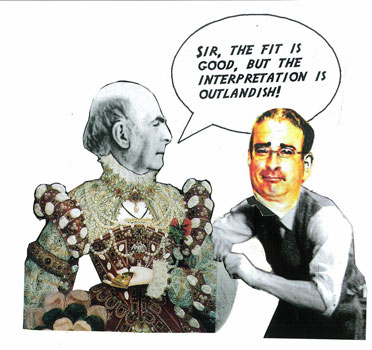
Oh yes, if you're still wondering: yes, I just stole a cartoon from their Mostly Harmless Econometrics. In both economics and fashion it's essential that the model fits, but interpretation is very important too.

Let's get back to Angrist before we digress too much. Indeed, I sometimes wonder how many students have been impressed by the Angrist and Krueger (1991) when they first came across it. 

The paper couldn't be more relevant to a student: “ what extent schooling is just an expensive signalling system, and to what extent does it actually increase earnings?”, the authors asked. The instrumental variable (IV) they used - when pupils could legally leave school across US states - is among the most elegant as natural experiments go. As a boon, it then gracefully reassured young readers their schooling had not been totally wasteful to society.

Alas, good things don't last. Subsequent studies found their instruments too weakly correlated with schooling to be robust. Nowadays, the paper features in lecture notes also as a cautionary tale: weak instruments can be worse than no instruments.

This by no means diminishes their pioneering work in investigating causal relationships by exploiting natural experiments with clever statistics. 

To paraphrase T.R. Roosevelt, the credit belongs to those who are actually in the arena, who err and come short, because there is no effort without error and shortcoming, etc. And if the world is to move forward at all, it does so mostly by trial-and-error. 

The Nobel Committee cannot be more right in recognising their “methodological contributions”: they might have got some answers wrong, but the path forward they laid endures.

My favourite illustration from Mostly Harmless Econometrics

===

Also on Facebook

P.S. There's also a fine article on today's FT by Tim Harford on the same topic. 

Tuesday, 21 September 2021

A foreign tourist's state of mind

In Kifisos (or Cephissus?) coach station, a tourist may indulge in juxtaposing the ancient and legendary with the modern and mundane as much as he likes. That bus is going to Ithaca - is it Odysseus's Ithaca? Edessa rings a bell, is it where the crusaders founded a county in the East? (No, that one is newer.) And Leonidio? Is that where apparently they still speak a descendant of Doric Greek

There was still almost an hour to kill before the 17:15 bus to Sparta departs. For some reason, there are quite a few book stalls in the station, but it's all Greek to me. 

So I walked into the main station café. Is that gentleman looking at me? 

"Do you have Covid-19?" 

"I hope not,,", I said, before I noticed he has a phone in his hand, ostensibly hoping to scan something, "err.. vaccine paper?" (pointing at my left arm)

"Yes." 

"Wait a sec.. here it is." 

Then I got permission to place an order for a disposable cup of ελληνικός καφές, safely. 

The plague of 430BC took away a quarter of Athens's population and arguably cost it its primacy in the Greek world. Okay, now it all makes sense.. or not. 

See, a foreign tourist's mind. Dreaming up the most tenuous juxtapositions between the old and the new again. 

Kifisos bus station

Also on Facebook

Thursday, 24 June 2021

In memory of Apple Daily

At the time of writing, the last edition of the Hong Kong tabloid Apple Daily is going on sale. The sun has not risen, but there are already long queues at newspaper stalls across the territory. 

This was a result of a series of assaults from the authorities. Its founder and majority shareholder Jimmy Lai had been charged with foreign collusion under the new “National Security Law” (NSL) last December and has been in jail under remand since. Last week, its editor-in-chief and chief executive were also taken into custody after being charged under the NSL. Its parent company Next Media then announced that it would close the newspaper down the coming Saturday as the authorities have also frozen its assets and accounts, rendering it unable to pay its staff. 

It was not to be. Yesterday morning another opinion writer was arrested. In the afternoon, the management decided to close the newspaper two days early, citing “safety of staff”. 

The Apple Daily has been an interesting creature. Its reporting style is unashamedly that of a tabloid: sharp, funny, and incisive. From celebrity news to culture features, from horseracing tips to international news, it gave readers what they wanted in that genre, in honesty, but also in a way they would like it. 

For its entertainment pages, this meant introducing US-style paparazzi into Hong Kong and Taiwan and pioneering the use of animations in news reporting. Western readers may remember a viral news animation about Tiger Woods - yes, that was Apple Daily's work. It was a quieter time with less to worry about, and readers liked its famously lewd yet witty gossips. 

On the other hand, its culture pages serves a different dish to a different clientele. From an author of a BAFTA- and Cannes-winning screenplay (Farewell My Concubine, Lillian Lee) in its early days, to a prolific lyricist (Albert Leung / Lin Xi), it is hardly unrefined. 

It has had its own fair share of scandals. Making a sensation "scoop" about a woman's suicide by paying the widower (Chan Kin-Hong) to visit a prostitute? Yes, that was Apple Daily in 1998. They lose libel cases, but again so do the pro-government tabloids like the Oriental Daily.

Editorially, it is firmly aligned with the cause of universal suffrage and the pro-democracy camp in Hong Kong. It might be less obvious at the time, but it did say it was founded as a paper that "belongs to Hong Kong" "in defiance of fear" back in 1995. 

Over the last 10 years or so, however, it has morphed into something slightly different. As local newspapers had one by one come under ownership of businessmen with significant interest on the Mainland, it increasingly found itself a lone and proud beacon of dissent. It took on columnists who no longer write elsewhere. 

Readers have started to perceive it differently too. Ten years ago, the Apple Daily was largely a tabloid with a pro-democracy bent. Today, Hong Kong democrats see it as an advocate for their cause, a speaker of truth to power with an endearingly colloquial style, a fixture that reminds them of another way of life before influences from the Mainland encroached. 

Indeed, for some, the perception has started to change very early on. A history teacher of mine once told us that he reads the Apple Daily because it “holds the powerful to account, though they use vulgar words”. 

Last year it started an English version. It was also unashamedly pro-democracy, but that was the whole point: to provide an alternative to Jack Ma's South China Morning Post

For most of my lifetime, the Apple Daily has been part and parcel of Hong Kong’s local life. Of course that does not necessarily mean anything: all sorts of organisations had been integral parts of lives somewhere until, well, they are not. The comings and goings of newspapers should be uneventful in a fair media landscape. Readers and advertisers are free to choose what papers they patronise. But freezing a media company's assets on trumped-up charges so that it has to close? That's thuggishly abhorrent.

I’d always prefer a tabloid that speaks truth to power in short words and colloquial constructions to a broadsheet that verbosely defends the indefensible for the powerful. 

I’d rather have the gutter press than the Pravda. 

And this is why the Apple Daily will be sorely missed. 

Queues for the last Apple Daily during the small hours of 24 June 2021 (Thu). Source: The Stand News

--------

News reports & analyses: 

Thursday, 3 June 2021

大嶼山唔只係個島,更加係座山

喺我哋市區人嘅眼光裏面,大嶼山只係一個大島。最近有網友留意到迪士尼明明喺大嶼山,但就有一半喺荃灣區、一半喺離島區,就覺得「有啲奇怪」。其實,如果代入以前啲漁民、農民嘅角度,就會覺得噉樣先至係正常。

大嶼山內部多山,島內交通十分之唔方便,唔可以作為一個經濟整體噉去理解。反而,鳳凰山、大東山就好似八仙嶺分隔上水同大埔咁,將大嶼山上面嘅居民分開。

啱啱睇完前港英新界政務署長許舒(James Hayes)1970年嘅《香港地區 1850-1911》。其中就提及喺1899年嘅時候,大嶼山上面嘅農村、漁村嘅居民,主要會去四個墟市:大澳、長洲、坪洲、同埋元朗(!)。其中三個都唔喺大嶼山上面。

1899年大嶼山嘅鄉村聚落,同埋佢哋關係最密切嘅墟鎮。
跟住許舒嘅《香港地區 1850-1911》表12(頁141)嚟畫。

諗深一層,其實又唔難明嘅。今時今日交通發達,香港境內大部份地方都通咗車路。但係喺以前,行水路往往係方便過行山嘅。試想像吓,你啱啱曬好咗啲鹹魚要去趁墟賣,順便想買隻豬返屋企。你話放啲鹹魚上船撐過去辛苦啲,定係孭住行山辛苦啲?

正因為係咁,大嶼山西面嘅農村、漁村,由北面嘅東涌去到南面嘅塘福,都會去大澳趁墟。

而東面、南面,即係芝麻灣半島、貝澳、梅窩一帶,佢哋嘅主要墟市係長洲、坪洲。其中長洲比較繁盛,向西就遠到石壁鄉嘅居民都會吸引到過嚟。而縱貫大嶼山南北岸嘅東梅古道,亦都吸引咗大蠔灣、白芒村嘅居民去長洲趁墟。而住喺竹篙灣、大白(今日嘅愉景灣)、稔樹灣嘅話,就會去坪洲。

直到今日,長坪兩洲雖然喺新界,但冇「鄉村」,亦都冇原居民代表,法律上係全港唯二嘅「墟鎮(market towns)」,只係得代表居民嘅街坊委員會。而坪洲鄉事委員會,仍然包括大嶼山上面嘅稔樹灣,同埋已經變咗愉景灣嘅大白、二白。

更加有趣嘅,係大嶼山北岸嘅東涌、沙螺灣、大蠔灣,亦都會去元朗趁墟。睇嚟行水路真係可以去到好遠都唔怕。

語言方面,似乎大嶼山大部分嘅村都係雜居嘅。就留意到貝澳十村有十二姓:客家、本地各六。如果計土地業權,更加係客家人多啲。石壁就純係本地人。長洲、大澳作為墟市,更加係講各種民系嘅人都有。可見去邊度趁墟,係山川形便嘅緣故為主,同講咩話關係唔大。

二戰後港英政府為咗行政方便,推動全新界嘅鄉村組成鄉事委員會,就通常係用當時嘅墟市作為中心。出來嘅結果,其實同1899年嘅觀察相差無幾。一條村係屬於「大嶼山南區」定大澳,基本上睇去長洲定係大澳趁墟就知。大蠔灣嘅白芒、牛牯塱、同大蠔新村,就因為東梅古道嘅緣故,繼續同梅窩扯上關係。嗰陣時,梅窩去中環嘅渡輪應該只係啱啱開辦,呢啲村嘅居民買嘢怕且都係去長洲。

大嶼山上面嘅現有鄉村,同埋佢哋所屬嘅鄉事委員會。大澳依家界定為十條「鄉村」,但長洲、坪洲就係冇原居民代表,淨係得街坊代表嘅「墟鎮」。
來源:民政事務總署鄉郊代表選舉入面嘅分界地圖。

至於大嶼山東北大轉、鹿頸嗰啲村,許舒冇記載佢哋去邊度趁墟。但到咗鄉事委員會成立嘅時候,佢哋就劃咗入馬灣。呢個都唔難理解:佢哋去馬灣、荃灣梗係方便過去長、坪兩洲,甚至大澳啦。到咗各區政務處、區議會成立,佢哋就跟住馬灣入咗荃灣區。

許舒嘅《香港地區 1850-1911》

======