Showing posts with label 英文 / English. Show all posts

Friday, 12 June 2026

The value(s) of AI models

This started as a couple of comments under an ex-colleague's musings on AI on Linkedin, but I thought it was worth setting out in a standalone post. So here are my current tuppence on the value(s) of AI models: 

(The future is inherently uncertain. All views my own. Etc.)
  1. There is a real chance that many investments in AI models will turn out to be NPV-negative for investors. 
  2. This is not necessarily a bad thing socially. If none of the frontier labs achieve the dominant market position that, say, Google achieved in search, the result could be cheap, widely available AI capabilities as profits are competed away and consumer surplus is created. 
  3. Many leading Chinese models, as well as Meta's Llama and Mistral's models, are open-weights. Everyone with sufficient hardware can run them locally. Everyone can, in principle, tailor them according to their needs. For example, last year, Perplexity released R1-1776, an adapted version of DeepSeek-R1 that answers more freely on topics the original model treats more cautiously, illustrating how open-weight models can be modified for different markets and norms. 
  4. So, in theory, the amount that frontier labs such as Anthropic can charge is constrained by (i) how much better they are than the open-weight models; (ii) the costs of operating them locally; and/or (iii) how much the open-weight labs charge for their interfaces. 
  5. Open-weight models are often estimated to be 4-8 months behind the frontier closed-weight models. How much are people willing to pay for a model that's just a few months ahead?
  6. This is not an either/or choice either. A couple of months ago, a developer told the FT that he spends $50 a day using Moonshot’s Kimi model for roughly 80% of his work, reserving Anthropic’s Claude for more complex tasks because using Claude alone would cost him $900 a day. 
  7. And the open-weight competition is real globally. It was reported that US technology companies have been adopting Chinese models due to cost concerns. I can see why: if these models can do most tasks sufficiently, if not equally, well, but for less than 10% of Claude's token price, they are viable alternatives in many cases. 
  8. If many developers end up using cheap open-weight models for most tasks and reserving Claude / GPT only for the hardest ones, that will have an impact on OpenAI and Anthropic's financial positions and valuations. 
  9. There have been a lot of discussions about AI safety recently. Any analysis that does not address China and/or open-weight models that can be run locally is at best incomplete. 
  10. The following statements are not mutually exclusive: (i) competition is good because it increases total welfare; and (ii) much of that welfare may show up as consumer surplus instead of profits or anything measured in GDP.
(proofread by GPT-5.5. All errors are human and mine.)

Generated by ChatGPT-5.5, with the lyrics of Eason Chan's 人工智能 ("Artificial Intelligence", 2001) as the prompt.


Monday, 4 December 2023

The Ferrymen's Stories

(1)

Mr A Fährmann is a mechanical engineer from Munich. In 1995, he moved to Swindon for a two-year secondment at the BMW Plant there. He never went back to Germany, because he fell in love with a Spanish woman. They decided to start a new family together in England because they both speak English. 

If you meet him in the pub, he'd proudly tell you he's from Germany. He may also tell you that - as he has been for years - that weißbier is better than anything he could find in Swindon, Germany plays football better, and so on. 

In 2001, the year his son was born, he received the Census form from an enumerator. For the ethnicity question, he ticked the box next to "White - any other White background". 

(2)

Mr A Watanabe is a mechanical engineer from Kobe. In 1995, he moved to Newcastle for a two-year secondment at the Nissan Plant nearby. He never went back to Japan, because he fell in love with a Taiwanese woman. They decided to start a new family together in England because they both speak English. 

If you meet him in the pub, he'd nicely tell you he's from Japan. He may also tell you that - as he has been for years - that Asahi Dry is better than anything he could find in Newcastle, his island nation (Japan) does seafood better than this one, and so on. 

In 2001, the year his son was born, he received the Census form from an enumerator. For the ethnicity question, he ticked the box next to "Asian - any other Asian background". 

(3)

It's now 2021. Mr B Fahrmann is a student in Manchester. He grew up in Swindon, and English is the only language he speaks fluently. He understands a bit of German because his father is from Germany, but don't expect him to read Goethe or the Süddeutsche Zeitung. When the Census letter arrived, he just logged off a Zoom lecture and started blutacking the message "9K 4 WHAT?" on his window. 

For the ethnicity question, he ticked the box next to "White - English". It must be right. Whenever his coursemates ask him where he is from, he always answers Swindon. And Swindon is in England. 

(4) 

It's now 2021. Mr B Watanabe is a student in Nottingham. He grew up in Newcastle, and English is the only language he speaks fluently. He understands a bit of Japanese because his father is from Japan, but don't expect him to read Murakami or the Asahi Shimbun. When the Census letter arrived, he just logged off a Zoom lecture and started blutacking the message "9K 4 WHAT?" on his window. 

For the ethnicity question, he ticked the box next to "Asian - any other Asian background". He does not like being asked where he is from. 

(5) 

"Fährmann" is the German word for "ferryman". "Watanabe" (渡邊) can also mean "ferryman" in Japanese. 

A traghetto crossing the Grand Canal of Venice; taken on 12 April 2012.

Also on Facebook

Wednesday, 6 September 2023

On Birmingham's "effective bankruptcy"

1) Yesterday, Birmingham issued a "section 114 notice" under the Local Government Finance Act 1988, or "declared effective bankruptcy" as the press describes it. All new expenditure, except to fund services it has to provide by law, are banned. Existing commitments and contracts will remain in place. It follows the footsteps of Northamptonshire (2018), Croydon (2020 and 2022), Slough (2021), Thurrock (2022), and Woking (2023). 

2) Councils have statutory duties to provide adult and children social care, which cost money. Indeed, more and more money is needed as population ages and expectations rise. 

3) Revenue has not risen in line. Since 2012, council tax increases over a certain threshold are banned, unless they are voted for in a local referendum (I have never seen one) or approved by the central government. And grants from the central government have been cut, because, well, austerity. 

4) Remember the eloquent "Barnet Graph of Doom" from around 2012? As statutory activities (ie social care) suck up more and more of the limited incomes, less and less is left over for "non-essentials": parks, libraries, road maintenance, etc. At some point, some councils can no longer meet their statutory duties, and... boom!


One of the many versions of the "Graph of Doom". Source. 

5) Sometimes, the situation is made worse by bad management and/or bad luck. 

6) Some councils are more fortunate. Westminster has licensing and parking incomes from the West End. Newham has been helped by Royal Docks and Stratford's settlement by working-age middle class council taxpayers who demand little social care services. Not all councils are like them. 

7) I suspect the section 114 notice has become an obligatory step to get to a politically feasible solution, because no one wants to be blamed for raising council tax or cutting services. 

In Croydon, the central government waived the local referendum requirement and approved — indeed, imposed — a 15% council tax hike, which it would only do under the political cover of the council's "effective bankruptcy". The local councillors can wash their hands clean, saying (rightly) they have been left with no choice.

It is disruptive, it is inefficient, but it's probably necessary.

8) The Guardian's headline called Northamptonshire a "Tory county council" when it issued a section 114 notice. The Daily Mail's article yesterday starts with the words "Labour-run Birmingham City Council". Neither is helpful. 

9) As the space for discretionary spending narrows, local elections are increasingly inconsequential. Whomever the voters elect, most of council taxes now go towards meeting statutory requirements set by Parliament. As the deputy leader of Croydon council powerfully put it in 2013, “there is a time coming, and it’s not far off, when the costs of dealing with an ageing and increasingly deprived population will mean that there is literally nothing left in many councils’ coffers for anything but social care."

10) I probably did not add anything. I am mostly repeating points that have been made since over ten years ago.  

====

Also on Facebook

Tuesday, 12 October 2021

Causal relationships and weak instruments

Yesterday the Nobel Economics Prize was awarded to David Card, Joshua Angrist and Guido Imbens for their "contributions to labour economics" and "methodological contributions to the analysis of causal relationships" respectively. 

Indeed, the news reminded me of some fond memories from my university days. Let's start with Jörn-Steffen Pischke's Labour Economics class. No fan of PowerPoint (who is?), he was most effective with a pen and a whiteboard. Problem sets had a decidedly empirical bent and almost always featured some use of Stata. Naturally, Card’s clever exploitation of events as natural experiments - from Mariel boatlift to state borders in the US - featured quite a bit.

But for the great majority of economists who did not do EC317 in the LSE, Pischke is probably best known for the funny yet practical (text)books he jointly wrote with the newly laureled Angrist.

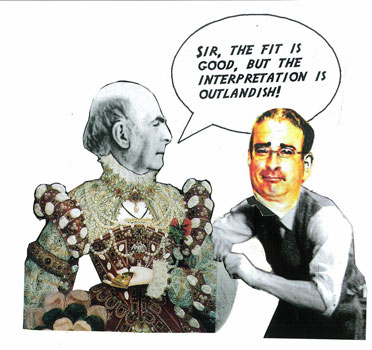
Oh yes, if you're still wondering: yes, I just stole a cartoon from their Mostly Harmless Econometrics. In both economics and fashion it's essential that the model fits, but interpretation is very important too.

Let's get back to Angrist before we digress too much. Indeed, I sometimes wonder how many students have been impressed by the Angrist and Krueger (1991) when they first came across it. 

The paper couldn't be more relevant to a student: “ what extent schooling is just an expensive signalling system, and to what extent does it actually increase earnings?”, the authors asked. The instrumental variable (IV) they used - when pupils could legally leave school across US states - is among the most elegant as natural experiments go. As a boon, it then gracefully reassured young readers their schooling had not been totally wasteful to society.

Alas, good things don't last. Subsequent studies found their instruments too weakly correlated with schooling to be robust. Nowadays, the paper features in lecture notes also as a cautionary tale: weak instruments can be worse than no instruments.

This by no means diminishes their pioneering work in investigating causal relationships by exploiting natural experiments with clever statistics. 

To paraphrase T.R. Roosevelt, the credit belongs to those who are actually in the arena, who err and come short, because there is no effort without error and shortcoming, etc. And if the world is to move forward at all, it does so mostly by trial-and-error. 

The Nobel Committee cannot be more right in recognising their “methodological contributions”: they might have got some answers wrong, but the path forward they laid endures.

My favourite illustration from Mostly Harmless Econometrics

===

Also on Facebook

P.S. There's also a fine article on today's FT by Tim Harford on the same topic. 

Tuesday, 21 September 2021

A foreign tourist's state of mind

In Kifisos (or Cephissus?) coach station, a tourist may indulge in juxtaposing the ancient and legendary with the modern and mundane as much as he likes. That bus is going to Ithaca - is it Odysseus's Ithaca? Edessa rings a bell, is it where the crusaders founded a county in the East? (No, that one is newer.) And Leonidio? Is that where apparently they still speak a descendant of Doric Greek? 

There was still almost an hour to kill before the 17:15 bus to Sparta departs. For some reason, there are quite a few book stalls in the station, but it's all Greek to me. 

So I walked into the main station café. Is that gentleman looking at me? 

"Do you have Covid-19?" 

"I hope not,,", I said, before I noticed he has a phone in his hand, ostensibly hoping to scan something, "err.. vaccine paper?" (pointing at my left arm)

"Yes." 

"Wait a sec.. here it is." 

Then I got permission to place an order for a disposable cup of ελληνικός καφές, safely. 

The plague of 430BC took away a quarter of Athens's population and arguably cost it its primacy in the Greek world. Okay, now it all makes sense.. or not. 

See, a foreign tourist's mind. Dreaming up the most tenuous juxtapositions between the old and the new again. 

Kifisos bus station

Also on Facebook

Thursday, 24 June 2021

In memory of Apple Daily

At the time of writing, the last edition of the Hong Kong tabloid Apple Daily is going on sale. The sun has not risen, but there are already long queues at newspaper stalls across the territory. 

This was a result of a series of assaults from the authorities. Its founder and majority shareholder Jimmy Lai had been charged with foreign collusion under the new “National Security Law” (NSL) last December and has been in jail under remand since. Last week, its editor-in-chief and chief executive were also taken into custody after being charged under the NSL. Its parent company Next Media then announced that it would close the newspaper down the coming Saturday as the authorities have also frozen its assets and accounts, rendering it unable to pay its staff. 

It was not to be. Yesterday morning another opinion writer was arrested. In the afternoon, the management decided to close the newspaper two days early, citing “safety of staff”. 

The Apple Daily has been an interesting creature. Its reporting style is unashamedly that of a tabloid: sharp, funny, and incisive. From celebrity news to culture features, from horseracing tips to international news, it gave readers what they wanted in that genre, in honesty, but also in a way they would like it. 

For its entertainment pages, this meant introducing US-style paparazzi into Hong Kong and Taiwan and pioneering the use of animations in news reporting. Western readers may remember a viral news animation about Tiger Woods - yes, that was Apple Daily's work. It was a quieter time with less to worry about, and readers liked its famously lewd yet witty gossips. 

On the other hand, its culture pages serves a different dish to a different clientele. From an author of a BAFTA- and Cannes-winning screenplay (Farewell My Concubine, Lillian Lee) in its early days, to a prolific lyricist (Albert Leung / Lin Xi), it is hardly unrefined. 

It has had its own fair share of scandals. Making a sensation "scoop" about a woman's suicide by paying the widower (Chan Kin-Hong) to visit a prostitute? Yes, that was Apple Daily in 1998. They lose libel cases, but again so do the pro-government tabloids like the Oriental Daily.

Editorially, it is firmly aligned with the cause of universal suffrage and the pro-democracy camp in Hong Kong. It might be less obvious at the time, but it did say it was founded as a paper that "belongs to Hong Kong" "in defiance of fear" back in 1995. 

Over the last 10 years or so, however, it has morphed into something slightly different. As local newspapers had one by one come under ownership of businessmen with significant interest on the Mainland, it increasingly found itself a lone and proud beacon of dissent. It took on columnists who no longer write elsewhere. 

Readers have started to perceive it differently too. Ten years ago, the Apple Daily was largely a tabloid with a pro-democracy bent. Today, Hong Kong democrats see it as an advocate for their cause, a speaker of truth to power with an endearingly colloquial style, a fixture that reminds them of another way of life before influences from the Mainland encroached. 

Indeed, for some, the perception has started to change very early on. A history teacher of mine once told us that he reads the Apple Daily because it “holds the powerful to account, though they use vulgar words”. 

Last year it started an English version. It was also unashamedly pro-democracy, but that was the whole point: to provide an alternative to Jack Ma's South China Morning Post. 

For most of my lifetime, the Apple Daily has been part and parcel of Hong Kong’s local life. Of course that does not necessarily mean anything: all sorts of organisations had been integral parts of lives somewhere until, well, they are not. The comings and goings of newspapers should be uneventful in a fair media landscape. Readers and advertisers are free to choose what papers they patronise. But freezing a media company's assets on trumped-up charges so that it has to close? That's thuggishly abhorrent.

I’d always prefer a tabloid that speaks truth to power in short words and colloquial constructions to a broadsheet that verbosely defends the indefensible for the powerful. 

I’d rather have the gutter press than the Pravda. 

And this is why the Apple Daily will be sorely missed. 

Queues for the last Apple Daily during the small hours of 24 June 2021 (Thu). Source: The Stand News

--------

News reports & analyses: 

Friday, 11 December 2020

The tragedy of Tedros Adhanom Ghebreyesus

I used to think Tedros Adhanom Ghebreyesus, WHO's head, had a pro-China bias. Now I think he has just been trying too hard to keep everyone happy in a futile quest to coax some of the most difficult leaders of our time into cooperating. 

To that end, he had said both Trump and Xi had "done a great job". Today, it has also been revealed that WHO conspired with the Italian government to suppress a damning report on the country. 

His position is not an enviable one. He

  1. has with only moral persuasion and no coercive power,
  2. leads an organisation that relies a lot on Western funding, 
  3. owes his own position with a lot of Chinese support through a one-state-one-vote procedure, and 
  4. was from and nominated by the TPLF, the former ruling party of Ethiopia which less than two weeks ago has just suffered a major setback in the ongoing civil war. He will need somewhere to go after WHO.

Could he have been more direct in 'handling' China,  Italy, the US, etc? Probably, but it might not have been intrinsically deplorable to take a position that it's better to coax countries and keep information flowing at least to WHO officials, who could then advise other governments how lives could be saved without naming the source. 

Of course, that strategy always carried a risk that he would become a useful fool to others. And, one would argue, he did.

====

Also on Facebook

Sunday, 6 December 2020

An ode to Hong Kong's 'pan-Western' cuisine

There's no such thing as 'inauthentic' food: a quick survey of Hong Kong's 'pan-Western' food with examples from my quarantine meals can tell you why. 

Exhibit 1: Beef spare ribs braised with red wine sauce, with a side of steamed rice, to start with a cream and butternut squash soup

Exhibit 1: The UK has 'pan Asian' eateries; Hong Kong has its fair share of 'pan Western' food too.

Take these beef spare ribs as an example. On the surface, the ingredients - celery, a red wine sauce - are unmistakably Western. But the side dish has been thoroughly localised.

Indeed, in most pan-Western eateries, one has exactly three side options: rice, pasta, or potatoes & salad. In that order. And by 'rice', it invariably means a portion of plain steamed jasmine rice. It's never basmati. It's never Nandos-style spicy rice either.

Exhibit 2: On the right is a localised borscht

Exhibit 2: This is a local version of the borscht - 羅宋湯 in Chinese, literally "soup of the Rus". White Russians took it to Shanghai with them after the 1917 communist takeover; the Shanghainese, in turn, took it to Hong Kong with them after the 1949 communist takeover. Somewhere on that journey cabbage replaced beetroot.

By convention, a local two-course pan-Western meal set starts with a soup. There are two and only two options: the 'red' soup, i.e. the house borscht, or a cream-based soup (eg Cream of Chicken / Mushroom) which is colloquially known as the 'white' soup of the day. The choice is often summarised as "red or white (soup)?" when waiters take orders. Don't confuse that with the similarly phrased question about wine.

Exhibit 3: Penne with beef brisket and shiitake mushroom

Exhibit 3: Yes, you're looking at some penne with beef brisket braised in rehydrated shiitake mushrooms. I think it's delicious. But, of course, this is not exactly Italian. I suspect my Italian friends might decry it as “inauthentic”.

In a similar way, Hongkongers in the UK often look down on British pan-Asian food: a kitsch mimicry of Chinese food that puts sweet and sour sauce on everything, the stereotype goes. Better stick with "authentic" Chinese restaurants and English pubs, we think (myself included).

The fashionable quest for “authenticity” could sometimes disparage hybrid cuisines as “fakes”. But they’re not. They’re fruits of cultural exchange over many years too. They may not be your taste - Wagamama has never been mine - but they’re no less “authentic”.

And we should know better.

======

Also on Facebook

Saturday, 5 December 2020

Arriving in Hong Kong during Covid

If I must come up with an analogy for Hong Kong's screening system, I would say it's like a linear video game with quite a few missions that have to be cleared one by one. 

  1. The tutorial level, of course, is having before boarding a 14-day quarantine package booking at a local hotel and – if you are arriving from a high-risk place such as the UK – a negative test result. Indeed, the thing I had been worrying most was not getting one at Heathrow. That was the only thing that could have derailed everything else.

  2. We were told on the plane that we have to fill in a health declaration form. Supposedly it could be done either on paper or online, but paper forms were nowhere found – not on the plane, nor could I see any upon arrival. They must exist somewhere, but I guess they want everyone to fill in the form and generate a QR code on their smartphone if they can. And that’s what I did.

  3. The next mission is a rather simple one. Passengers with a smartphone have to download an app called, rather plainly, StayHomeSafe. You could tell it was the designed back in the early days when everyone could quarantine at home. You have to show the form's QR code and the app to get past the first checkpoint. 

    First checkpoint (30.11.2020, 17:46)

  4. Then there's a security check for all arrivals. That’s something new.

  5. At another checkpoint, an official would verify the phone numbers one supplied on their declaration by calling it. As soon as your phone rings, one would be given a pink raffle-ticket-sized piece of paper, with the words “Tel OK” on it.

    "Tel OK"
  6. One then gets a welcome pack: two reusable CuMasks, and a 47-page bilingual 'Points to Note' for inbound travellers in a cozily unpretentious brown "On Government Service" envelope. Oh yes, an electronic tag on my arm too.

    Contents of my welcome pack

    A StayHomeSafe electronic tag

  7. Then one came to a sign that said: “obtain quarantine order”. In my case, I had waited almost an hour and a half before I could be seen by an authorised officer under sub. leg. 599E of the Laws of Hong Kong. I showed him the QR code to my form and my hotel booking. In exchange, I got two items.

    The quarantine order station has a typically Hong Kong set-up: unpretentious, pragmatic, does the job. Almost nostalgically symbolic. (30.11.2020, 18:50) 

    The first is a compulsory quarantine order. It is an A4-sized piece of paper which legally instructed me – under pain of a fine of HK$25,000 and a prison term of 6 months maximum – to take a PCR test, wait for its result at a designated place, and then go to and stay in the quarantine hotel I've booked.

  8. The second is a test kit. Yes, you've guessed it – the next mission is to take another Covid test. Following what illustrative videos showed, I went into a testing booth, made a “kruuuaaa” sound to bring up saliva from my throat, disposed them into a plastic test tube with reactants in it, and put the whole thing into a sealable bag marked as “BIOHAZARD”. 
    "BIOHAZARD": my saliva sample (30.11.2020, 19:32)

  9. Since my test result would only be available the next morning, I was given a room number in the government "holding centre" in which I would have to spend the night in. 

  10. At the end comes the familiar bits: immigration, baggage reclaim, and customs. The airport was eerily empty.

    An eerily empty airport (30.11.2020, 20:10)

  11. After 4.5 hours in the airport, a coach took us to the "holding centre", which used to be a three-star hotel in Tsing Yi with a great view over the container ports.

    The Department of Health also provided dinner and breakfast. Both took me down the memory lane and reminded me of school meals of old. 

    At 11 am the landline phone in my room rang. “You may go now“, the other end said. I quickly packed up my stuff, checked out, and – this might be the biggest "loophole" in the whole system – went to the quarantine hotel by my own means. And there I have been staying.

    A room in the Holding Centre. There wasn't any desk so I had to have my school-meal-style dinner on top of my suitcase. (30.11.2020, 21:48)
All in all, it's quite a draining and thorough process. But, I guess, It does also keep people of Hong Kong and their normal lives safer. 

Saturday, 28 November 2020

Telling the Ts from the Ds

I suspect I've never pronounced the voiced stops /b/, /d/, and /g/ properly. 

Indeed, my ears could hardly distinguish them from their voiceless counterparts /p/, /t/, and /k/ when they are unaspirated - e.g. when they're behind an /s/ in English as in "spot", "stop" and "scar" or in Romance languages like French, Italian and Portuguese. 

Take the t/d set as an example. In English they correspond in fact to three sounds: 

  1. Aspirated voiceless "T" as in "top" (example)
  2. Unaspirated voiceless "T" as in "stop" (example)
  3. Unaspirated voiced "D" as in "dog" (example)

In French, Italian and Portuguese they usually correspond to #2 and #3 - a pair that’s barely distinguishable to my ears. Indeed, many of the videos I found on this topic were made to teach Spanish & Portuguese speakers how (1) in English is meant to be pronounced.

On the other hand, "T" and "D" in Cantonese and Mandarin apparently correspond to #1 and #2 above. Having grown up in a Cantonese-speaking society, perhaps I have been approximating D in English with #2 - or did I not? I cannot tell. 

The reality is as long as I stick to Cantonese, Mandarin and English, I could get away with not distinguishing #2 and #3: aspiration was enough to tell "T" and "D" apart in all three of them regardless of voicedness. Indeed, this distinction would not have come to my mind if I haven't been making forays into Portuguese recently. 

This probably also explains why the voiced consonants, B, D and G, are never used in Hong Kong place names - in the ears of 19th century Europeans, there were probably only different versions of Ps, Ts and Ks. For example, one could argue that Tung Chau Street has an aspirated "T" (i.e. #1), but Tung Chung has an unaspirated one (i.e. #2).  

These are, of course, not the most complex Ts and Ds there could be. Hindi, for example, has eight (!) consonants that all may sound like some forms of Ts and Ds to outsiders.

(I’m sure many of you have noticed this a long time ago, but it still came as a sort of minor epiphany to me this month..)

Mapping Ts and Ds from Cantonese, English, French and Hindi. In the case of Hindi, I set out in each cell first the dental consonant, then the retroflex. In the other three, they're all somewhat alveolar. 


====

Also on Facebook

Thursday, 5 November 2020

My first box of masks in 2020

Yesterday, on the eve of a second lockdown in England, I used up my first box of masks this year. 

It is one of the few boxes of EN14683 Type IIR masks I ordered on 26 January, i.e. 2nd Day of  Chinese New Year. Wuhan had just gone into lockdown. Long queues formed outside Hong Kong's pharmacies, often before sunrise, for surgical masks that may or may not come on sale at 10 or 15 times their previous price. Perhaps I'll want to send some to friends & family back in Hong Kong, I thought, so I went to Boots' website and placed an order with them. 

My first box of masks this year

A few hours later I tried to place another order but it got rejected. Boots had run out of surgical masks. 

When the masks arrived I posted them all save a single box of 50 to Hong Kong. Why did I do that? I certainly thought I most probably wouldn't need them, but, well, it wouldn't do any harm to keep a box on the top of my bookshelf anyway - just in case. 

Surgical masks stayed hard to buy for months. We learnt casting our nets beyond the UK with the help of national registries of online pharmacies established under the European Directive 2011/62/EU (thanks), but it seems many people did as well. In the end, I only managed to get 15 more boxes from Germany, which were also airlifted to Hong Kong. 

The situation was better with hand sanitisers. They had gone off the market for a week or two, but they were back by mid-February. In the few happy days when Chinese case number had started to fall, but outbreaks in Korea, Iran and Italy were still in the future, Boots even did a 'Buy 2 Get 1 Free' promotion with their pink, Valentines themed, 100mL bottles of sanitisers. I got a few dozens, kept one for myself, and posted the rest. 

It had turned out to be my only bottle throughout the first lockdown.

By March the flow of masks reversed. I received two boxes of unsolicited masks from my family: one I later found out to be of the anti-dust, anti-pollution variant, and another contained 50 individually-packaged masks. "Overpackaging!", I thought, but they did come handy on my trips five months later. 

In April I also received two homemade fabric from my friends in Cambridge. They have been very useful on short errand trips. 

But this trusty box of Type IIR masks remained my best for a long while. Sturdy, breathable and with a strong aluminium strip that prevents steaming up when properly fitted, I saved them for my longer trips away from home. I cycled with them to Putney, to Windsor and to Cambridge. I used them on my flights to and back from Heidelberg too. 

As England goes into lockdown again, it might be useful to reflect on how far we have come since the first one. Both disposable and fabric masks are now easily obtainable at reasonable prices, and I counted 70% compliance with masking in Stratford Centre the other day. Hand hygiene - and public hygiene in general - have improved. We may not be where we want to be, but we've come a long way. 

And we'll be alright. 

"We'll be alright", handwritten on a lunch delivery bag today. 

=========

Also on Facebook and Instagram

Tuesday, 3 November 2020

"It's Covid, stupid"

 Controlling Covid rewards politically:-

  1. Korea's centre-left Democratic party won the highest number of seats by any party since 1960. 
  2. Ardern's Labour Party won a landslide in New Zealand. 
  3. Approval ratings for Taiwan's Tsai Ing-wen have reached her all-time high - after nearly five years in office. 
  4. Australia's centre-right Coalition has recovered from the last bushfire season and is leading in the national polls again. 
  5. On the contrary, in the wake of Covid outbreaks in foreign workers' quarters, Singapore's ruling PAP has been returned to office with its worst result since independence. 

The message could not be clearer: it's not so much about left or right, global or local, climate change, immigration, tax, abortion, or China. These are serious topics - but at this moment, in many voters' minds, they rank far, far lower than staying alive and having normal lives. 

And voters know if they are still living normally under the current lot's watch. As a cigar-loving, incumbent-defeating President of the United States could have said, 

"It's Covid, stupid."

===

Also on Facebook


Thursday, 28 May 2020

Extendable work & study visas for British Nationals (Overseas)

Today Dominic Raab, the British Foreign Secretary, has announced that
[1] If China goes down this path and implements this national security legislation, we will be required to change the status of BN(O) passport holders and set in train arrangements which allow them to come to the UK [2] for longer than the current six-month period and to apply for extendable periods of 12-months [3] to work and study, which itself will provide a pathway to citizenship. 
(the numberings are mine)
There are three key elements in what he said.
  1. "if China goes down this path..."
    Comment: This remains conditional on the UK's future interpretation of Chinese actions.

  2. BN(O)s will be allowed to stay for 12 months rather than six
    Comment
    : This is rather meaningless.

  3. Extendable 12-month work & study visas that can lead to settlement

    Comment
    : This could be meaningful, but details remain scanty. In particular:
    (i) will an employer or university sponsor be required for the first twelve-month period? for extensions beyond the first year? This will mean a lot for people whose field is dominated by self-employment.
    (ii) what will be the taxpaying requirements or income thresholds on the route to ILR & citizenship, if any?
    (iii) at what level will the administration fee be set? This can add up if yearly renewal is required.
    (iv) probably the least important point, but will there be any recourse to public funds in the first 5 years? 
Some additional comments & warnings:

(a) Policy statements can be fluid. The details are ostensibly still being worked out. A lot of developments can happen between what was initially announced and what actually goes into law or Home Office guidance notes.

(b) Like the US announcement yesterday, this sounds like an acceptance that Hong Kong is now a lost cause. The UK may take some working-age, tax-paying Hongkongers who can and want to start a new life, but that's it.

(c) China will, of course, complain in public, but it may relish it in private: after all, those who are best placed to move are likely to be also those who are most able to organise and support the opposition in Hong Kong.

If enough middle-class democrats leave, the pro-Beijing camp might become a majority among those who remain. The older and more working-class democrats could in effect be abandoned.

(d) BN(O) registration was only open to Hongkongers who were born before July 1997, or those who had lived in HK for 7 years before that date.

Anyone under 23 certainly won't have it.

Anyone who moved to Hong Kong after July 1990 certainly won't have it - e.g. Edward Leung and Nathan Law.

Just saying.

====

[Postscript on 3 July 2020]

On 30 June 2020, Beijing imposed its "Law on Safeguarding National Security" on Hong Kong. In a statement in the Commons the next day, Raab confirmed that five-year visas for work and study with a pathway to citizenship will be made available to BN(O)s:
We [...] have now developed proposals for a bespoke immigration route for BNOs and their dependents. We will grant BNOs five years’ limited leave to remain, with a right to work or study. After these five years, they will be able to apply for settled status, and after a further 12 months with settled status, they will be able to apply for citizenship. This is a special, bespoke set of arrangements developed for the unique circumstances we face and in the light of our historic commitment to the people of Hong Kong. 
All those with BNO status will be eligible, as will their family dependents who are usually resident in Hong Kong, and the Home Office will put in place a simple, streamlined application process. I can reassure hon. Members that there will be no quotas on numbers.
This offer is slightly more generous than what was announced on 28 May 2020, but details remain scanty. Most observations above except (1) and (2) remain relevant.

====

Also on Facebook

Links:

Wednesday, 27 May 2020

When the US considers treating Hong Kong as if it is China

Today, US Secretary of State Mike Pompeo, under the provisions of United States-Hong Kong Policy Act of 1992 and the Hong Kong Human Rights and Democracy Act (HKHRDA) of 2019, reported to Congress that Hong Kong no longer merits separate treatment from China under US law.

My quick thoughts:-
  1. The US stance is more like "Hong Kong is now a lost cause. Let's cut losses, stop pretending it's autonomous, and stop China from exploiting this loophole".

  2. This is bad for the Hong Kong economy. After this, what's the point after all to pay Hong Kong rent and Hong Kong wages?

    If you don't really need links to the US market, you might as well move to Mainland China. It'll not be too different from Hong Kong by then, but you at least will be in a larger market with lower labour costs.

    If you do need links to the US market, then being in Hong Kong will be no better than being in Shanghai very soon. You might as well start planning your relocation: Singapore? Tokyo? Taipei? Even... Manila or Bangkok?

  3. This is bad for HK's freedoms in the short to medium term too. I'm afraid things will only get worse - for at least a few years - before it starts getting better.

    Since the demise of our manufacturing sector, Hong Kong's economy in the last 20 years or so has been built around being the conduit of China-Western trade and investment flows. This is founded on unspoken mutual consent - which is now no more.

    This will be a vicious spiral: the more the US deals with Hong Kong the way it deals with the rest of China, the lower Hong Kong's value to China will become, and the less China would be willing to keep HK distinct... and so on.
  4. This is, in a way, a classic example of how brinkmanship can unfold.

    When Congress enacted the HKHRDA's in November 2019, it has an annual certification mechanism that was designed, of course, to deter China from changing the status quo further.

    Then China pushed on with imposing a national security law in Hong Kong, betting on a muted response from the US.

    Then the US, with remarkable efficiency, started the HKHRDA processes in a matter of days,  probably in the hope of watering down the law's text.

    And one could (only) guess how this would end.
Also on Facebook

Links:

Wednesday, 18 March 2020

Do generals always fight the last war? (Part 1)

Taiwan and Hong Kong

1) They certainly learnt their lessons from the SARS episode of 2003. Who could have forgotten it? If I forget SARS, may my right hand forget its skill. Taiwan and the people of Hong Kong were given no time and acted quickly. Memories were evoked. Old plans dusted off and put into action. Within a week or two, everyone donned a mask and washed their hands obsessively. Borders were made to close. Visitors from affected regions are isolated. Temperature check-points were set up. It was as if they've rehearsed for this outbreak - and in a sense, they did. 

They then stick to their hard-learnt experience with utmost stubbornness. Outside and WHO experts offered their kind advice: "face masks don't work" or "closing borders won't work" they said, but to little effect. Did the same package of measures not overcome SARS 17 years ago? the people of Hong Kong and Taiwan told themselves. Is SARS not a coronavirus too?

Now, almost two months in, Hong Kong and Taiwan are held up across the world as beacons of success against Covid-19. They feel vindicated. Rightly so: bragging rights have to be earned and have been earned. 

2) But one thing did not go according to plan. In Taiwan and Hong Kong's lived experience, SARS peaked in two months and didn't quite spread beyond East Asia (except Toronto). They went in expecting a sprint. Now, as Covid-19 broke out in the West and could soon spread across Africa, they are gradually waking up to a reality that it's going to be a long war of attrition. 

Can they - metaphorically - fight on the beaches and the streets, for months after months, until the day a vaccine comes to the rescue? Don't get me wrong, I am not doubting the will to fight on. Morale is high, and the recent vindication gave it another boost. On the other hand, a vaccine could take months or years to find. 

3) Of the two, Hong Kong is richer but probably more vulnerable. Most of its medical and health supplies, including the humble surgical mask, are imported. As Covid-19 rampage across the globe, procurement would only become harder by the day. There have been investment in local production, but it's unclear to what extent it will be able to meet demand. 

The mainstay of its economy - finance, professional services, and tourism - will be badly hit by international travel restrictions and the coronavirus slump. After all, what is an international business hub if people cannot meet there? 

One day Covid-19 might have become endemic in many countries. The costs of carrying on with the defence could feel prohibitive to some. By then Hong Kong may have to debate whether it should come to terms with the situation instead - and that debate could be an ugly one.

4) Taiwan, on the other hand, is better placed for a long fight. It has a diversified industry structure with a strong manufacturing base. It can make most medical supplies, and it's always easier to expand existing industries there than to build them up from scratch. Even if travel restrictions persist and the world enters a period of depression, the island probably can and will continue to export its semiconductors and pineapples. 

****

(to be continued - will try to discuss the response across the West in general and in the UK more specifically)

Also on Facebook

****

(Postscript on 24 February 2025: An anecdotal observation I had back in March 2020 was that, from a cursory glance, it appeared that many senior public health officials in the West spent sizeable parts of their careers in less developed parts of the world, which may had an impact on their perception of what was possible. But, as it turns out, Part 2 was never written, and it probably never will be.)

Friday, 6 March 2020

To mask or not to mask? My take on the face mask question

Summary: Most experts from Geneva to Hong Kong agree that masks offer some imperfect protection to the wearer, but they do stop carriers of the coronavirus from giving it to anybody else.

Global supply of masks is limited. Governments and societies must choose between (i) trying to get a mask on everyone's face to prevent transmission and (ii) accepting an outbreak will come and save stock up for healthcare staff and the sick.

****

First of all, the facts. They don’t conflict with each other as they may first appear.

1) CDC and WHO advise that wearing a face mask improperly won't protect the wearer. Of course. Hooking your sunglasses on your top won’t protect your eyes from the sun either.

2) Wearing a face mask alone won't fully protect the wearer: the eyes are still unprotected and can come into contact with infected droplets.

3) Many governments (eg Singapore’s) recommend people showing symptoms to wear a mask so they wouldn’t infect other people e.g. when they cough or sneeze.

4) This coronavirus is known to have an incubation period. For up to 14 days, an infected person could be going about their life before any symptom show up.

5) If everyone's wearing a mask, then those who have caught the virus but haven't been showing symptoms have a much lower chance of infecting others: droplets can infect people through their eyes, but they almost certainly come out of noses and mouths which face masks would cover.

This is the approach publicly recommended by health experts in Hong Kong eg Prof Pak-Leung Ho as the FT quoted. It is also the approach a large proportion of Hongkongers chose to follow despite what the government said.

Indeed, it was on the same ground Prof Ho recently advised against wearing a certain type of N95 masks that filters air that goes in but not the air that goes out.

6) This is summarised succinctly by Dr Michael Ryan, WHO’s executive director for emergencies: “masks don’t necessarily protect you, but they do - if you have the disease - stop you from giving it to anybody else.”

****

So, where does the world stand now? We may want to observe the following:

7) If a government advises universal mask-wearing, its people may expect it to secure supply at price similar to pre-crisis levels.

[This is, of course, against economics. Who’s paying for overtimes? If new factories were built, who is paying for the capital costs? And what about risk premium in investing in new factories?]

8) The world can produce around 40m face masks per day before Jan. China accounts for around half of that. Taiwan was 3rd largest and is now 2nd largest producer. Both have effectively stopped exports. So did major producers like Thailand and South Korea.

To put things into context: Taiwan’s population is 23m; China’s 1,386m.

9) Therefore I can understand why many governments want to reserve limited supply for their medical staff and discourage mass use of face masks. Singapore is one of the few that has been honest with its citizens on this.

10) When governments in Mainland China, Taiwan and now Korea recommended universal mask-wearing, they also introduced measures to ramp up production.

11) Taiwan’s fellow market democracies may learn more from studying its case than China’s. The government there bought mask-making machinery and then gave them to existing manufacturers in return for face masks of the same value. Effectively, a government-brokered financing lease. This way it managed to expand daily production from 4m to 10m within a month.

12) Hong Kong’s government never officially recommended universal face mask wearing. Its leader Carrie Lam even tried to tell civil servants not to wear them "unless they feel unwell" - but the next day, if my memory served me well, half of the officials at a press conference she chaired donned a mask. Hongkongers chose to listen to experts, not unelected politicians.

They learnt it the hard way: Hong Kong saw 299 or 38.6% of the global death toll from 2003 SARS. Once bitten, twice shy.

13) As a Hongkonger myself, I wish no other country had to learn lessons the same way.

14) So how has Hong Kong been getting its masks? Its own production - run by the prison service to supply government agencies - was a paltry 50,000 per day for a population over 7m. But when prices skyrocketed from pre-crisis $1 (HKD, same henceforth) each to $10-20 each, the private sector and civil society came to the rescue.
  • Small pharmacies got them overseas, probably at a higher price than usual wholesale price, and sold them with a high margin.
  • Large pharmacy chains like Watson's sourced them overseas and sold them at cost, earning praise and brand value.
  • Politicians and activists of all shades sourced them from around the world. Did Joshua Wong, that activist of international fame, not bring masks back from Honduras? There’s no better time to prove to the people that your lot is more competent than the other.
Benefits - of political, brand, or immediate monetary kinds - mobilised the private sector and civil society groups and they brought face masks back to Hong Kong. Charities then bought them for the poor. Prices have since gone down to a more reasonable $5 each. Adam Smith’s invisible hand works.

15) Therefore, unless France has enough productive capacity for its own medical staff, I think its decision to requisition face masks will only exacerbate the shortage in that country. Now, no supplier in their sound mind will want to route their deliveries through France.

When incentives are right, market and individuals are usually better at buying stuff and bringing them home.

16) Admittedly, many of these masks bought by Hongkongers at higher-than-usual prices were baseline stock held in other countries eg Germany, Honduras, UAE, Turkey. Now they may need them a lot more than they thought.

17) Hong Kong is a relatively rich place. As the coronavirus goes global, it (and other East Asian countries that chose universal mask-wearing) may have priced medical staff in poorer countries out of essential protective gear. That’s apparently also why the WHO does not advise universal mask-wearing.

****

What about here in London?

18) Back in early Feb, my friends and I were trying to buy face masks for re-export from UK wholesalers. Most were already telling us they had no stock to sell us because their order books have already been block-filled by the NHS.

I get that the UK government / NHS might have wanted to appear inactive so that they don’t stoke a panic. But, in fact, they don’t seem to be that inactive.

19) Because the NHS has been stocking up, I suspect whatever you can still get on the high street these days are parallel-imported overseas. You probably won’t be competing with the NHS.

20) So, to wear or not to wear? I’m no health professional. All views in this note are that of a layman, ie my own.

My take is that wearing a mask wouldn’t hurt you. If you’ve never worn one, it’ll be good to find and watch a video online that teach you how to wear it properly beforehand. It probably would reduce the risk you face more when you’re on a plane or in the tube. In any case, a face mask almost certainly keeps some of the air pollutions in the tube out.

But a humble surgical mask won’t make you virus-proof. It wouldn’t and shouldn’t replace good hygiene either.

P.S. I’ll try my best to stay at home if I show symptoms. If I have to go out, I’d wear a mask to avoid infecting others, even if at the end it turns out to be just common cold.
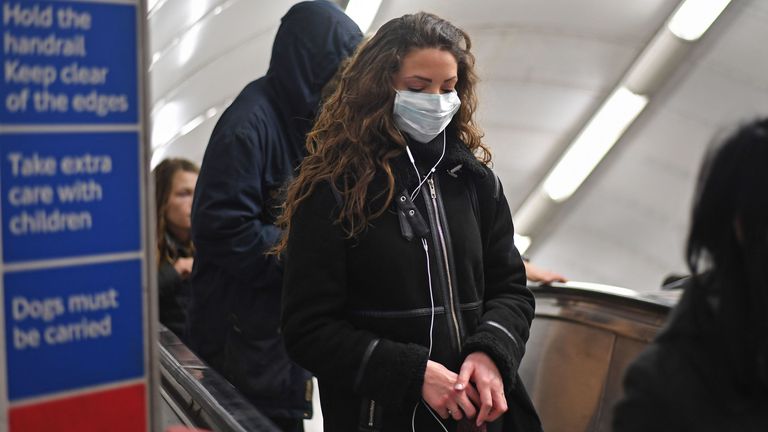
A woman at Green Park station on the London Underground tube network wearing a protective facemask. PA Photo. Picture date: Wednesday March 4, 2020. See PA story HEALTH Coronavirus . Photo credit should read: Kirsty O'Connor/PA Wire
A mask-wearer at a London airport. Source: Sky
****

Also on Facebook

Original inspiration:


Wednesday, 4 March 2020

The coronavirus approaches Britain

My kind friends in Hong Kong read on social media that shelves went empty in UK supermarkets and asked if it's their turn to ship health supplies over.

So I took stock this morning. I still have 47 surgical masks (which went out of stock in major pharmacies here.. a month ago?). I intend to reserve them for higher-risk situations, eg on a plane or when worst comes to worst. That should hopefully last a month or two.

Hand gels are locally made here in the UK. When they last ran out in late Jan, most pharmacies managed to restock in a week or two. Boots even did a buy-2-get-1-free sale on them. I have 2 medium bottles and hopefully that should last till stock returns to normal.

I also checked out my local Sainsburys this morning and found it pretty well stocked. BBC did report supermarket shelves going empty in the West Country due to good old British "wintry conditions". My heart is with people there.

As usual, too much context is lost in translation. This applies to both Far Eastern news as reported in Western outlets, and the other way round as well.

As a precaution to any short term supply disruption I'd start maintaining a stock of non-perishable necessities at 2-4 weeks' usual run rate. For now most if not all can be sourced here in the UK locally.

Stay safe & healthy, my friends

Well-stocked Sainsbury's in Stratford Centre, morning of 4 March 2020. Hopefully this will last... 
Also on Facebook

Monday, 22 July 2019

Another step in Hong Kong's Ulsterisation

Yuen Long MTR station in the evening of 21 Jul 2019. Sourced from Channel News Asia. 
It was the summer of 2016. A few months had passed since the civil unrest in Mongkok. Edward Leung, and also a few others, were just barred from standing in LegCo election later that year. I was reading McKittrick and McVea's history of The Troubles. It was around that time I got a minor epiphany: Hong Kong society was becoming more and more like that of Northern Ireland.

Deryck Chan and I discussed this and we both agreed, with the hope that we would be proven wrong. The conversation is in the picture below. Three years had flown by since.

Conversation with Deryck, 2 August 2016. Click to enlarge. 
Last night, in the suburban commuter town of Yuen Long, the city probably took another step in its descent to violence. A gang of thugs in white, armed with clubs, attacked anyone they could find in the train station - children and pregnant women included. Many but not all of the passengers were returning protesters wearing black from central Hong Kong. Hours passed before police arrive at the scene, right after the thugs left.

But this, of course, was not new. Thugs, ostensibly with no connection with the government, attacked protesters in the early days of the 2014 Occupy movement too. So did members of public reasoned with the attackers, or begged them to cease, with the same punch in the face. Sadly, this is not a new step.

What's new is this: in some videos, people in black fought back and chased away those in white with whatever sticky objects they could find by the road. Another Rubicon has been crossed: people took justice into their own hands when they lose confidence in the system.

It may be hard to believe this now: less than five years ago, protesters trusted the same system so much, they raised their hands in face of pepper spray and tear gas. They wanted to show their peaceful intent as if it would have helped their cause. That trust, first earned then inherited, is no more. It had been spent, bit by bit since 2012, in exchange for short-term political gains as one supposedly impartial public service after another was brought into politics. We are now in uncharted waters and can only guess what may ensue.

Hong Kong's modernity had largely been put together in the last 20 years of colonial rule, under instructions that can be broadly summarised as 'avoid embarrassing the Secretary of State'. Its foundation has always been delicate. At its heart is a public administration that was ostensibly apolitical and impartial, serving all with an efficiency that Hong Kong could be proud of. It was supplemented by elaborate performances of public consultations. The whole thing was then dressed up to mimic democracy, which has been put out of reach.

Humpty Dumpty is sitting on a wall. If he loses balance and falls, he probably can't be put together again.

It takes tact to simply keep the show running. Governments can only stay tactful for so long before they start playing with fire - sometimes probably without knowing.

------

Facebook version of this post

News from the day:
Discussion on the attackers' identity:


Wednesday, 13 June 2018

An argument for sunset clauses in international treaties

I’m not a big fan of Monbiot, but his column today on Trump's attempt to insert a five-year sunset clause into NAFTA is almost bang-on.

In the 1940s the world’s statesmen designed the Bretton Woods system, which they thought was an international monetary system built to last. Major exchange rates were fixed. Imbalances are supposed to be absorbed by inflation, capital controls, and occasional devaluations.

In the 1990s the world’s diplomats designed an elaborate international trade system of WTO and regional treaties. It abolished most non agricultural quotas, replaced the 1980s’ political agreements with a ostensibly rule-based system, and locked in the zeitgeist of free trade and free markets. They saw all that they created, and thought it was very good.

But things change over time. Priorities evolve. What was once held dear may become irrelevant. If one part of the machine were fixed, then either some other parts of it have to move more to accommodate the fluctuations, or tensions can build up and eventually break the fixed component. When Nixon nixed Bretton Woods in 1971, the system Keynes and Morgenthau designed already felt tired and has seen a few devaluation crises.

That’s why sunset clauses can be good. Five years is quite probably too short, but new issues and new priorities can be addressed in renegotiations every 10 or 15 years. Sunset clauses may also make agreements less controversial: as every mobile operator knows, it’s easier to get people on one-month rolling contracts than a two-year fixed contract, despite most of them then stay on for more than two years.

What about business certainty? Well, we at present have treaties that were written to last, and do we have a lot of business certainty? If there had been sunset clauses, investors at least could be more certain about when to lobby.

Tuesday, 24 October 2017

Attribution of Blame

I was to catch a train today, and before that I had to pass something to a friend at a tube station on the way. I allowed around 20 minutes of buffer in my journey time.

My friend was late for about 10 minutes. Then I got on the tube, missed a stop, and had to go backwards from the next station, which wasted another 10 minutes. I managed to catch the train only seconds before it departed.

Now in the (relative) comfort of a train, I start to wonder, what if I had missed the train? Who should I have blamed?

A. My friend.
B. Myself, for missing the stop on the tube.
C. Myself, for not allowing enough buffer time.
D. All of the above.
E. None of the above.
F. Blaming is not good. I shouldn't have blamed anyone or anything.

Discussion on Facebook